Web accessibility and digital inclusion help people participate in information, work, and leisure. Technology should be usable by older adults, people with limited resources, and people with disabilities.
The digital divide includes both internet access and the ability to use it. The original article cites historical connectivity figures for 2000, 2016, and 2020; those numbers should not be treated as current.
Digital inclusion and its main obstacles
The European Commission describes digital inclusion as enabling everyone to participate in and benefit from digital society.
This calls for action in several areas:
- Build access to technology through infrastructure, affordable prices, and usable interfaces.
- Provide assistive technologies and accessible design for people with disabilities.
- Teach digital skills from basic education onward.
- Support people and communities facing specific barriers to online participation.
The divide is not only between those online and offline. Other obstacles limit meaningful use.
- A lack of training can make online tools difficult to use.
- Low confidence may keep people from trying unfamiliar digital services.
- Poor design can make products inaccessible or confusing.
Older people, rural communities, people with disabilities, and other marginalized groups may face overlapping barriers.
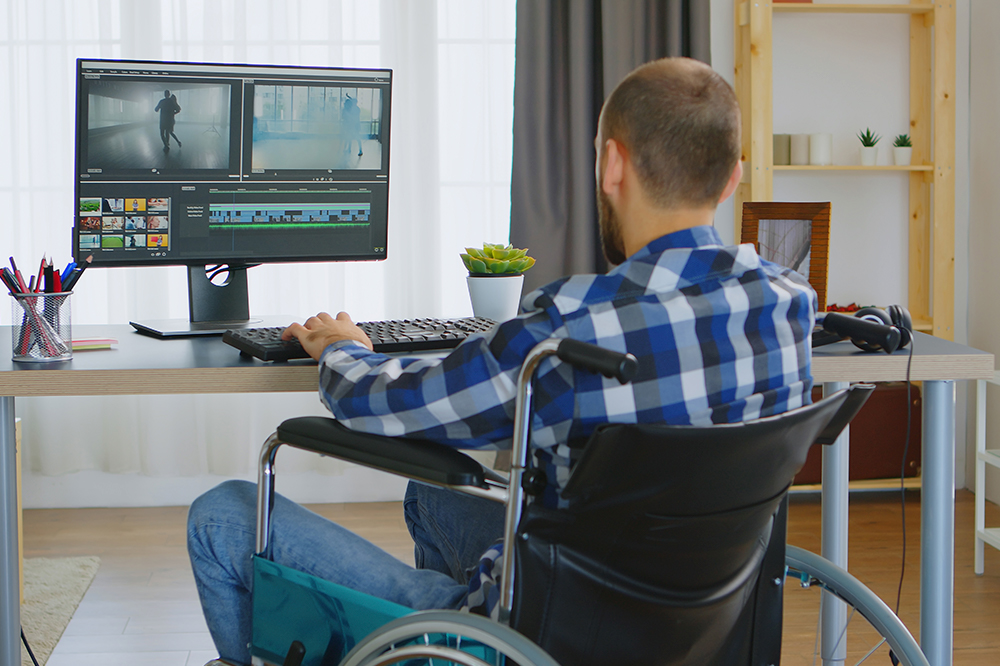
The purpose of web accessibility and digital inclusion
The web was envisioned as a broadly useful space. Inclusion requires attention to barriers that affect different people:
- Accessibility: adapt devices and content to remove obstacles for people with visual, hearing, motor, or cognitive disabilities.
- Cost: affordable access matters for households with limited resources.
- Digital skills: connectivity alone is not enough without opportunities to learn.
- Relevant content and services: local languages and useful services make participation more meaningful.
Benefits of digital inclusion
Internet services can expand opportunities in education, work, public life, and social connection when they are safe and accessible.
Potential benefits include:
Broader job opportunities
Digital roles and networking platforms can connect people to jobs and projects, provided access and skills are available.
More learning options
Online courses and mobile learning can make education more flexible, including for people who cannot attend in person.
Better use of time
Digital services can simplify certain tasks and reduce travel, while thoughtful design helps avoid new burdens.
Wider access to information
Online media and shared resources can support learning and civic participation.
Greater awareness of digital scams
Digital literacy can help people recognize fraud such as phishing.
Initiatives supporting digital participation
International organizations have pursued efforts to narrow the digital divide:
UNESCO has supported initiatives on participation in digital society, including education and health applications. The original article also mentions Mobile Learning Week.
The European Commission funded digital-inclusion projects under the historical Horizon 2020 program, including work on accessibility.
Creative content and games can also serve as entry points to digital participation; the article mentions the EU's Creative Europe program.
Types of disability and access needs
- Physical disabilities can affect movement, dexterity, or other bodily functions; accessible interfaces should offer more than one way to interact.
- Intellectual disabilities can affect learning and adaptive skills. Clear language and predictable design may help, while individual needs vary.
- Mental-health conditions can also create access needs. Avoid assuming that a diagnosis determines a person's abilities or experience.
- Psychosocial disability refers to restrictions that may arise when mental-health conditions interact with social barriers; respectful, person-centered design matters.
- Some people have more than one disability or access need.
- Sensory disabilities include different kinds of hearing and visual disability.
- Hearing disabilities vary widely; captions, transcripts, and visual alternatives can improve access.
- Visual disabilities also vary; text alternatives, contrast, keyboard support, and compatible assistive technology can help.
A person may have more than one disability. Avoid outdated labels and ask users which supports work for them.
International observances
The International Day of Sign Languages is marked on September 23; the UN proclaimed it in 2017.
The date commemorates the founding of the World Federation of the Deaf in 1951.
International Week of Deaf People is observed in the last full week of September; dates vary by year, so the range in the original article is not universal.
The observance can draw attention to rights, participation, sign languages, and barriers faced by Deaf and hard-of-hearing people.
Colors of inclusion
The article describes a Mexican project called 'Los colores de la inclusión' involving Comex, Museo Memoria y Tolerancia, Universidad Iberoamericana, and Yo También.
Its partners gathered information on priority groups, support organizations, symbols, and inclusive language.
The original article listed groups represented in the project's first stage. The list was specific to that initiative and should not be treated as a universal classification.
At EthicsGlobal, we believe better understanding can help build a community that recognizes everyone's equal worth and supports equal opportunity for people with disabilities.
You have read Web Accessibility and Digital Inclusion, Part One. We also recommend: What Is NMX-025?
For more, follow us on Twitter, LinkedIn, Facebook and YouTube.